
Poker Bankroll Management Pitfalls: How Budgeting Errors Ruin Poker Careers
Bankroll management is crucial for poker success, yet even experienced players fall into common traps. This article dives into the most frequent mistakes and provides actionable advice to safeguard your poker career.

Bankroll management is a cornerstone of stable and long-term success in poker. While the concept is simple – play at stakes you can afford and never exceed your loss limit – it’s a minefield where many players, even seasoned ones, lose their entire bankroll. Success isn’t just about skill at the table; it’s about discipline, psychology, and realistic risk assessment.
This article will thoroughly examine the most common bankroll management pitfalls and offer strategies to avoid them, ensuring your poker journey is both exciting and financially secure. Understanding these mechanisms is vital for anyone aspiring to grow and thrive in this demanding game.
Why is Bankroll Management Essential?
Without proper bankroll management, even the best player is destined for long-term failure. Poker is inherently a game of variance, meaning you can experience losing streaks despite playing optimally. A well-managed bankroll acts as a buffer, allowing you to weather downswings without being forced to quit. It also enables better decision-making – a player not worried about every lost tournament can focus on strategy rather than panic.
Generally accepted bankroll management guidelines suggest having a specific number of buy-ins for a given stake. For cash games, 30-50 buy-ins are often recommended, while for multi-table tournaments (MTTs), it can be as high as 100-200 buy-ins. For instance, if your available budget is $1000 and a tournament buy-in is $50, you should ideally have at least 50-100 such buy-ins before considering playing at that level. This is crucial protection against „tilt” – emotional play caused by a string of losses.
Common Bankroll Management Pitfalls
Moving Up in Stakes Too Quickly
This is arguably the most frequent mistake. A player wins several sessions in a row, their bankroll grows, and out of excitement or a desire for faster profits, they decide to move up in stakes before their bankroll is truly ready. A typical scenario: a player has a bankroll equivalent to 20 buy-ins at NL100, but after a winning streak, they move to NL200 with only 10 buy-ins. One bad run at the new, tougher stake can lead to rapid bankruptcy.
Moving Down in Stakes Too Slowly
The opposite of the previous error, but equally destructive. A player suffers losses, their bankroll shrinks, but due to pride, habit, or hope of a quick recovery, they continue playing at their „favorite” stakes, which their current bankroll no longer supports. This is a direct path to ruin. Instead of dropping to a lower stake and playing with less pressure to rebuild, they remain in a situation where every subsequent hand worsens their position.
Treating Poker Funds as „Disposable Income”
Many players treat poker as a hobby, considering the money allocated for the game as something they can „lose without regret.” While a degree of emotional detachment is healthy, completely ignoring risk is dangerous. If the poker funds come from household expenses, savings for an important goal, or borrowed money, you are playing with funds whose loss will have real consequences. Good bankroll management assumes every buy-in is an investment intended to yield a return, not an irreversible loss.
Ignoring Additional Costs
Bankroll management often focuses solely on buy-ins. However, other costs are frequently overlooked: rake, tournament fees, taxes, and even travel expenses for live tournaments. These elements reduce your effective bankroll and increase the required number of buy-ins. For example, if a tournament has a $100 buy-in with a $10 fee, the actual cost of entry is $110. This seemingly small difference becomes significant over hundreds of tournaments.
Lack of Clearly Defined Rules
Many players improvise. They don’t have written rules for when to move up or down in stakes, or what to do after a prolonged losing streak. In moments of stress and emotion, it’s easy to make a rash decision that undermines the entire purpose of bankroll management. Clear, written rules act as an anchor in a storm.
„Freezing” Your Bankroll
Some players, after reaching a certain level, decide to „freeze” their bankroll and only play at stakes that allow for a comfortable lifestyle, even if their bankroll theoretically supports higher limits. This is a conservative strategy that can be suitable for recreational players but can become a barrier to progress for those aiming to develop and play at the highest possible stakes.
Playing Below Optimal Buy-in Levels
A common rule suggests 10 buy-ins as an absolute minimum. However, this is often insufficient. If a player has only 10 buy-ins for a stake, they are highly vulnerable to bankruptcy even with a minor unlucky streak. An adequate number of buy-ins, as previously mentioned (30-50 for cash games, 100-200 for MTTs), provides greater security and allows for a focus on strategic play.
How to Build and Protect Your Bankroll
Set Realistic Goals and Rules
Determine how much money you will allocate to poker and how many buy-ins you need per stake. Write down these rules and adhere to them. For example: „I will move up to NL25 when my bankroll reaches $150 (30 buy-ins of $5). I will drop back down to NL10 if my bankroll falls below $100 (20 buy-ins of $5).”
Maintain Detailed Records
Every session, every tournament, should be meticulously logged. Record buy-ins, winnings, losses, and all other expenses. Analyzing this data will reveal where you are truly profitable and where you are losing, and whether your current stakes are appropriate. Tools like PokerTracker or Holdem Manager are invaluable for this process.
Practice Emotional Discipline
Learn to recognize the signs of „tilt” and react accordingly. If you feel anger, frustration, or are making impulsive decisions after a loss, take a break. Sometimes, ending the session is a better choice than trying to chase losses impulsively.
Consider a Percentage-Based Bankroll Management System
Instead of rigid limits, a percentage-based approach can be used. For instance, after achieving a certain profit, you might decide to cash out a portion, reinvest some in further development (like coaching), and add only 50% of the session’s profit to your bankroll. This approach allows you to enjoy winnings while not taking excessive risks.
Never Play with Borrowed Capital
This is an absolute rule. Playing with money you cannot afford to lose is a recipe for disaster. The stress associated with debt can ruin your game and lead to even greater losses.
Table: Minimum Buy-ins by Game Format
| Game Format | Conservative Bankroll (e.g., 50+ buy-ins) | Standard Bankroll (e.g., 30 buy-ins) | Aggressive Bankroll (e.g., 20 buy-ins) |
|---|---|---|---|
| Cash Games (NL) | $100 (for NL50) | $60 (for NL50) | $40 (for NL50) |
| Tournaments (MTT) | $200 (for a $20 tournament) | $120 (for a $20 tournament) | $80 (for a $20 tournament) |
| Tournaments (SNG) | $150 (for a $15 SNG) | $90 (for a $15 SNG) | $60 (for a $15 SNG) |
The table above provides examples. Actual figures should be adjusted based on individual financial capacity and strategy.
What Remains Uncertain?
Despite clear bankroll management rules, the human element always plays a role. Even the best-prepared player can make mistakes under stress, fatigue, or misjudgment. The uncertainty of when „tilt” will occur or what the actual variance will be in an upcoming session is an inherent part of poker. Therefore, continuous monitoring of your emotional and financial state is crucial.
Before taking your next steps in your poker career, dedicate time to a thorough analysis of your current bankroll management. Assess whether you are sticking to your established rules, are aware of all associated costs, and can effectively manage your emotions. If you have doubts, consider consulting a more experienced player or coach who can help identify areas for improvement. Remember, poker is a marathon, not a sprint, and your bankroll is the fuel that must last the entire race.
Powiązane aktualności
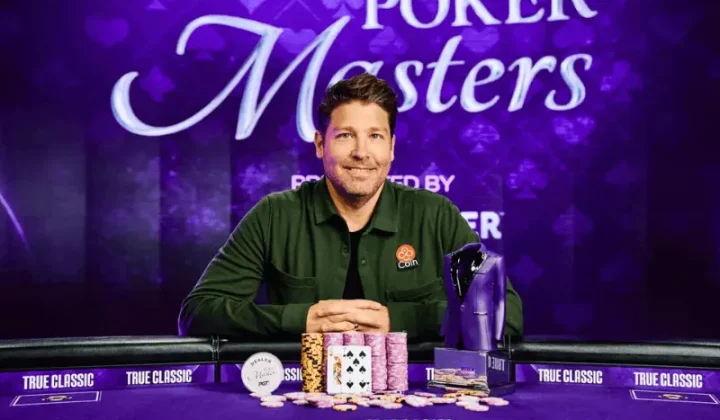
Jeremy Ausmus wygrywa Poker Masters #7 i zdobywa dziesiąty tytuł PGT w karierze
Jeremy Ausmus zwyciężył w evencie #7 Poker Masters 2026, inkasując 278 400 dolarów. To jego dziesiąte trofeum w cyklu PokerGO Tour i…
Czytaj dalej
Daniel Negreanu: Lucas Jumalon zostanie w pokerze na dłużej
Daniel Negreanu wysoko ocenił grę i podejście Lucasa Jumalona, zwycięzcy Main Eventu WSOP 2026. Jego zdaniem młody mistrz nie zamierza zniknąć po…
Czytaj dalej
Shawn Murphy triumfuje w RGPS Houston $600 Main Event. Zgarnia $51 000 i życiowy sukces
Amerykanin Shawn Murphy pokonał 538 graczy w turnieju RunGood Golden Expedition w Houston, inkasując $51 000 – największą wygraną w swojej karierze.…
Czytaj dalej
GGPoker zakazuje oprogramowania firm trzecich – PT4, HM3, Jurojin i inne muszą być wyłączone przed uruchomieniem klienta
GGPoker wprowadza całkowity zakaz uruchamiania oprogramowania firm trzecich równolegle z klientem. Lista obejmuje PokerTracker 4, Holdem Manager 3, Hand2Note, Jurojin i StarsCaption.…
Czytaj dalej